
Key takeaways
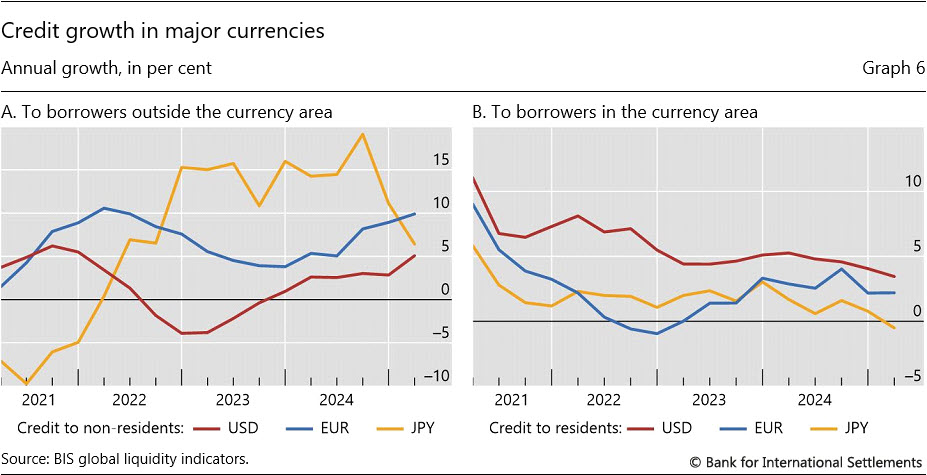
- The BIS global liquidity indicators show that foreign currency credit in dollar, euro and yen grew respectively by 5%, 10% and 6% year-on-year at the end of the first quarter of 2025.
Global liquidity indicators at end-March 2025
The BIS global liquidity indicators track total credit to non-bank borrowers, covering both loans extended by banks and funding from international bond markets. This is broader than the bank credit considered in the previous section. International bond funding is captured through the net issuance (gross issuance less redemptions) of international debt securities. The focus is on foreign currency credit denominated in the three major reserve currencies (US dollar, euro and Japanese yen) to non-residents, ie borrowers outside the respective currency areas.
Foreign currency credit saw elevated or rising growth rates. Year-on-year growth in foreign currency dollar credit (ie to borrowers outside the United States) was 5% as of Q1 2025 (up from 3% posted the previous quarter), reaching $13.7 trillion. The comparable figures for euro and yen stood at 10% (reaching €4.6 trillion) and 6% (reaching ¥65.6 trillion), respectively (Graph 6.A). While the growth rates of dollar and euro foreign currency credit have been rising since 2023, the growth rate of yen credit outside of Japan, though still robust, has been falling since Q3 2024. The yen slowdown came after the start of monetary tightening in Japan and the August 2024 carry trade unwinding, following growth rates of well over 10% during the preceding two years.
The year-on-year growth rates of credit to residents of the respective currency areas were considerably lower than their non-resident (foreign currency) counterparts and trending down. Dollar credit to US residents remained positive at 3% (at end-Q1 2025) but continued a declining trend seen over the past four years (Graph 6.B). Euro credit growth within the euro area also remained low (2%), while growth in yen credit to borrowers in Japan dipped just below 0%.