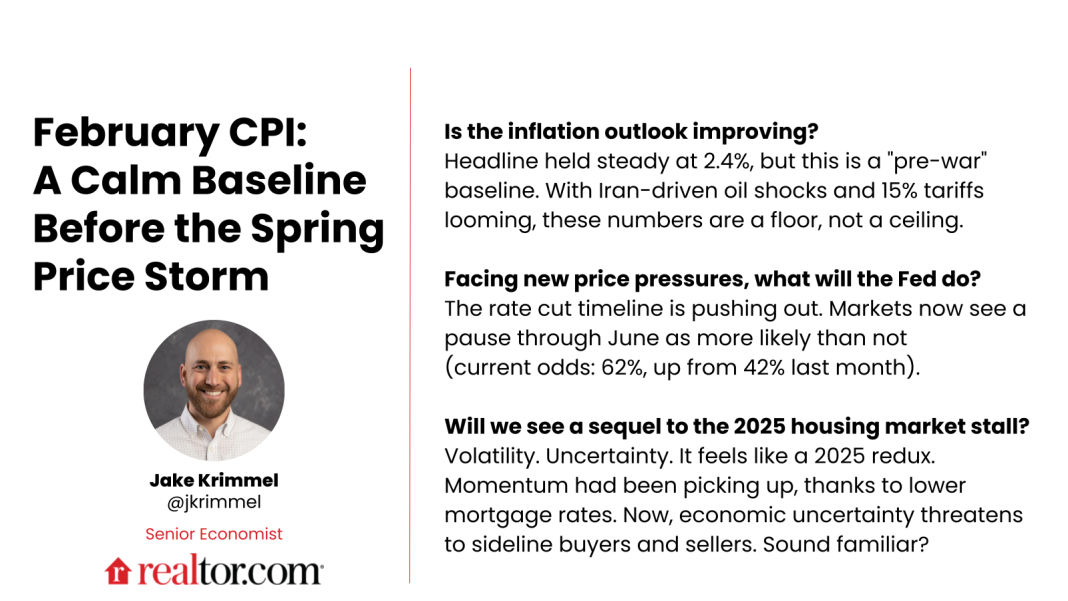

April’s Consumer Price Index came in at 3.8% year-over-year — exactly at the top of forecasts — but the more troubling story is in core inflation, which ticked up to 2.8% as early signs emerge that the energy shock is bleeding into broader prices. With real earnings falling 0.5% from March to April and Treasury yields rising on the release, the risk of inflation contagion is no longer hypothetical. Here’s what it means for the Fed, consumers, and the spring housing market.
April 2026 CPI at a Glance
- Headline CPI: 3.8% YoY (+0.6% MoM, SA) — up from 3.3% in March
- Core CPI (less food & energy): 2.8% YoY (+0.4% MoM, SA) — up from 2.6% in March
- Gasoline: +5.4% MoM (SA), +28.4% YoY — energy shock continues
- Shelter: +0.6% MoM, 3.3% YoY — elevated, but largely a data artifact from the government shutdown rolling off the calculation
- Airline Fares: +2.8% MoM — early sign of energy bleed-through into core
- Real Earnings: -0.5% MoM — consumers losing ground in purchasing power terms
April CPI: Hot print, hotter core, and the first signs of bleed-through
April’s Consumer Price Index came in at 3.8% year-over-year (+0.6% MoM, seasonally adjusted) with core inflation ticking up to 2.8% (+0.4% MoM, SA). Even though today’s hot print was expected due to the ongoing oil price shock, it is troubling nonetheless. The more telling story is what’s happening outside of energy. Airline fares rose 2.8% on the month, and apparel and household furnishings both increased, pointing to early signs that the energy shock is bleeding through into core prices via fuel costs and Strait-related supply chain disruptions. Shelter jumped 0.6% on the month, though that largely reflects a data quirk from the government shutdown rolling off the calculation. Crucially, real earnings fell 0.5% from March to April, meaning consumers are now losing ground in purchasing power terms.
What started as an energy story is beginning to turn into something broader — something we’re calling inflation contagion.
From energy shock to inflation contagion: What the Fed is watching
This is only the second post-oil shock datapoint, but the directional signal is worrying. What started as an energy story is beginning to turn into something broader, something that we’ve been calling inflation contagion. For a Fed in transition, rising core inflation and a likely even hotter core PCE number make rate hikes a more credible threat than they were even a month ago. Treasury yields ticked up on the release this morning, which tells you markets are reading it the same way.
What inflation contagion means for the spring housing market
Higher inflation prints, whether driven by volatile energy shocks or something more sustaining, are bound to impact the spring and summer housing market too. Higher bond yields mean higher mortgage rates, squeezing affordability further at the exact moment the spring market needs buyers to feel confident enough to act. Beyond rates, today’s real earnings decline represents a double-blow to housing affordability, which had been headed in the right direction earlier in the year. Consumers who feel squeezed at the gas pump and uncertain about the future of the economy tend to pull back from making housing decisions with confidence. So far none of the warning signs are flashing red, but the data to watch are new listings, mortgage purchase applications, pending sales, and cancellations. If inflation contagion takes hold, those are the places it will show up first.
Stay up to date on the latest economic and housing research
Sign up for the Realtor.com Economic Research newsletter for data-driven insights on the economy, housing market, and what it all means for consumers.