
Iran struck Kuwait International Airport early Wednesday, killing one person and injuring others, Kuwait’s Ministry of Foreign Affairs said.
The attack, which Iran’s Islamic Revolutionary Guard Corps reportedly denied responsibility for, is the latest blow to an already weakened ceasefire agreement that has been repeatedly undermined by military action in recent days.
While the Trump administration says the ceasefire remains in place, attacks have escalated as the war proceeds into its fourth month.
President Donald Trump did not answer directly when asked at the White House on Wednesday afternoon if the ceasefire was still on in light of the Kuwait attack.
“You know, there’s a reason for everything,” Trump said. “And we hit them pretty hard the night before, and actually last night.”
He added, “A ceasefire there is much different than a ceasefire in other parts of the world.”
Both sides in the conflict have been trading fire.
The Kuwaiti foreign affairs ministry in a translated statement Wednesday morning condemned “the brutal and ongoing Iranian attacks using ballistic missiles and drones” against “civilian and vital facilities,” including the latest strike on the airport.
The IRGC claimed the attack was caused by a U.S. military systems error, Iran’s state-affiliated news outlet Tasnim reported, citing a spokesman for the military branch.
One day earlier, U.S. Central Command said it defeated multiple Iranian ballistic missiles and drones, and launched “self-defense strikes” on Qeshm Island in the Persian Gulf, in response to “attempted attacks” by Tehran.
Iran had launched “several” ballistic missiles toward regional neighbors, though none hit their intended targets, CENTCOM said in a statement. Two Iranian missiles fired at Kuwait fell short or broke apart en route, and three missiles launched at Bahrain were immediately intercepted by U.S. and Bahrain air defense forces, it said.
The U.S. also shot down three one-way attack drones launched by Iran toward civilian mariners that were transiting regional waters, according to CENTCOM. No U.S. personnel were harmed, the statement said.
The U.S. and Iran appear locked in a volatile stalemate, as ongoing efforts to reach a peace deal have been punctuated by public diplomatic disputes and military action.
Iran is reportedly reviewing an agreement proposed by the Trump administration to pause the war but has not communicated with Washington for a few days, Iranian media reported on Tuesday.
Iran said earlier this week it would stop communication with the U.S. and move to completely block the Strait of Hormuz, in response to Israel’s military operations in Lebanon against the Iran-backed militia Hezbollah.
Israeli Prime Minister Benjamin Netanyahu, in an interview Wednesday with CNBC, expressed optimism for the development of alternate oil transport routes to the strait.
“That’s what’s happening now,” he said. “Not, it’s going to happen, it’s already happening now.”
Trump said in an interview with CNBC on Monday he did not care if the negotiations with Iran were over. But he later insisted that the talks were ongoing.
Trump, in an interview with the New York Post’s “Pod Force One” podcast published Wednesday, said Iran has agreed not to possess any nuclear weapons — though he added Tehran could still “change their mind.”
He also confirmed Axios’ report that he told Netanyahu in a phone call, “You’re f—ing crazy. You’d be in prison if it weren’t for me.”
Trump told the Post, “I was a little bit perturbed at his constantly fighting with Lebanon,” but added that he and Netanyahu have “worked very well together” during the Iran war.
Netanyahu told CNBC on Wednesday that he was “not going to get into details” of that call.
Tensions in the Middle East have escalated in recent weeks. The IRGC has attacked the U.S. Fifth Fleet headquarters and an airbase and helicopters in the region using missiles and drones, in response to what the IRGC described as a U.S. attack on a communications tower south of Qeshm Island, Reuters reported on Wednesday, citing Iranian media.
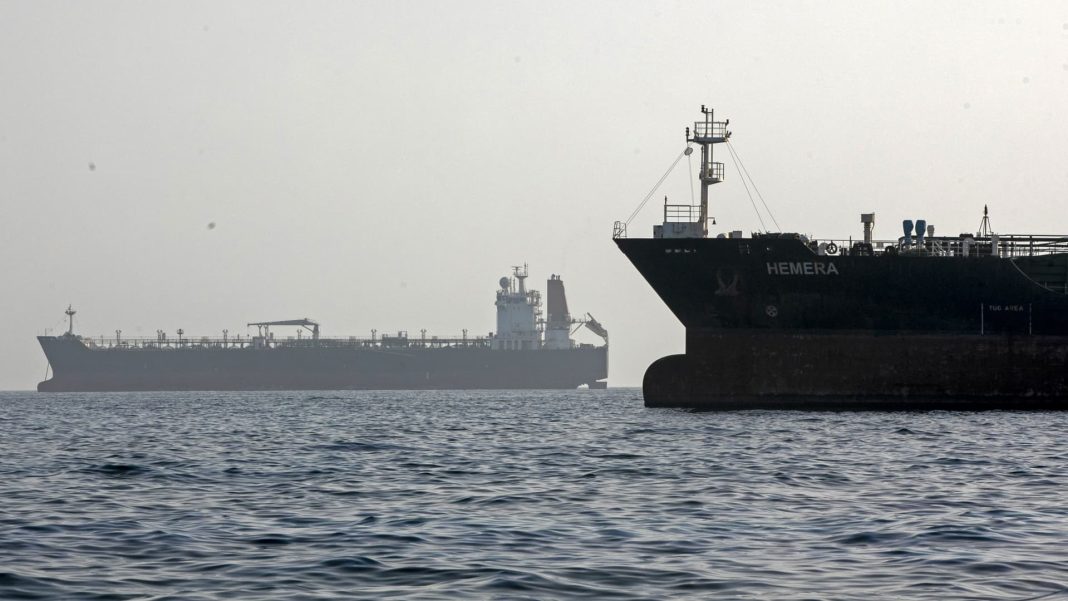
The IRGC navy also targeted a vessel with missiles in response to what it said was a U.S. attack on an Iranian tanker near the Strait of Hormuz with a projectile that damaged the engine room, according to Reuters.
Governments in the Gulf region reported drone attacks on Wednesday, with Kuwait’s air defenses confronting “hostile missile and drone attacks” while the country urged citizens to adhere to the security and safety instructions in place.
Bahrain’s interior ministry also sounded warning sirens urging residents to seek shelter.
“It’s hard to gauge when [the conflict and negotiations] may finally come to an end,” Rick Gardner, chief investment officer at RGA Investments, said on CNBC’s Squawk Box Asia on Wednesday. He expects markets to oscillate between conflict-related negative shock and resilient corporate earnings.
“You’ve got a two-edged sword there,” Gardner said, adding that investors who step back from markets over geopolitical uncertainty risk being “on the wrong side of the trade,” pointing to strong earnings and guidance as reasons to stay in.